 Steady Bites
A little perspective goes a long way.
Food, everyday habits, and research worth making sense of.

Everyday Habits
Fit a Walk Into a Trip You Already Make
A familiar errand may have one walkable section even when the whole trip is impractical on foot. Check the route, timing and return load before changing how you travel.

Everyday Habits
Give Your Phone a Place Before the Meal
Try choosing where your phone will wait before one meal starts. Agree on exceptions for important contact, and leave room for conversation rather than another rule to police.
Food & Drink Culture
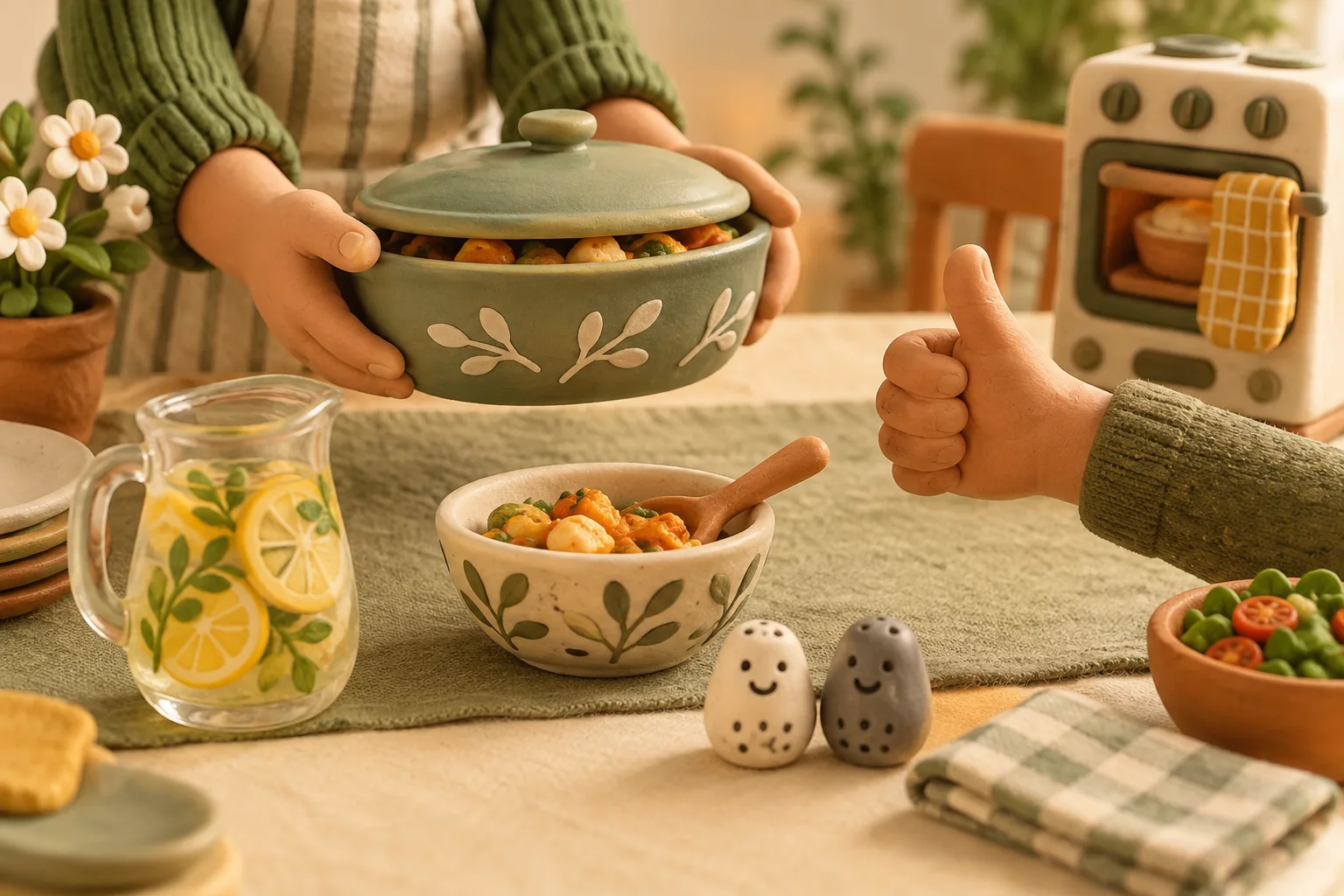
Before You Decide What to Bring
When guests are contributing food, a specific offer helps the host plan. Agree on the role of your contribution before choosing a dish.
Everyday Habits
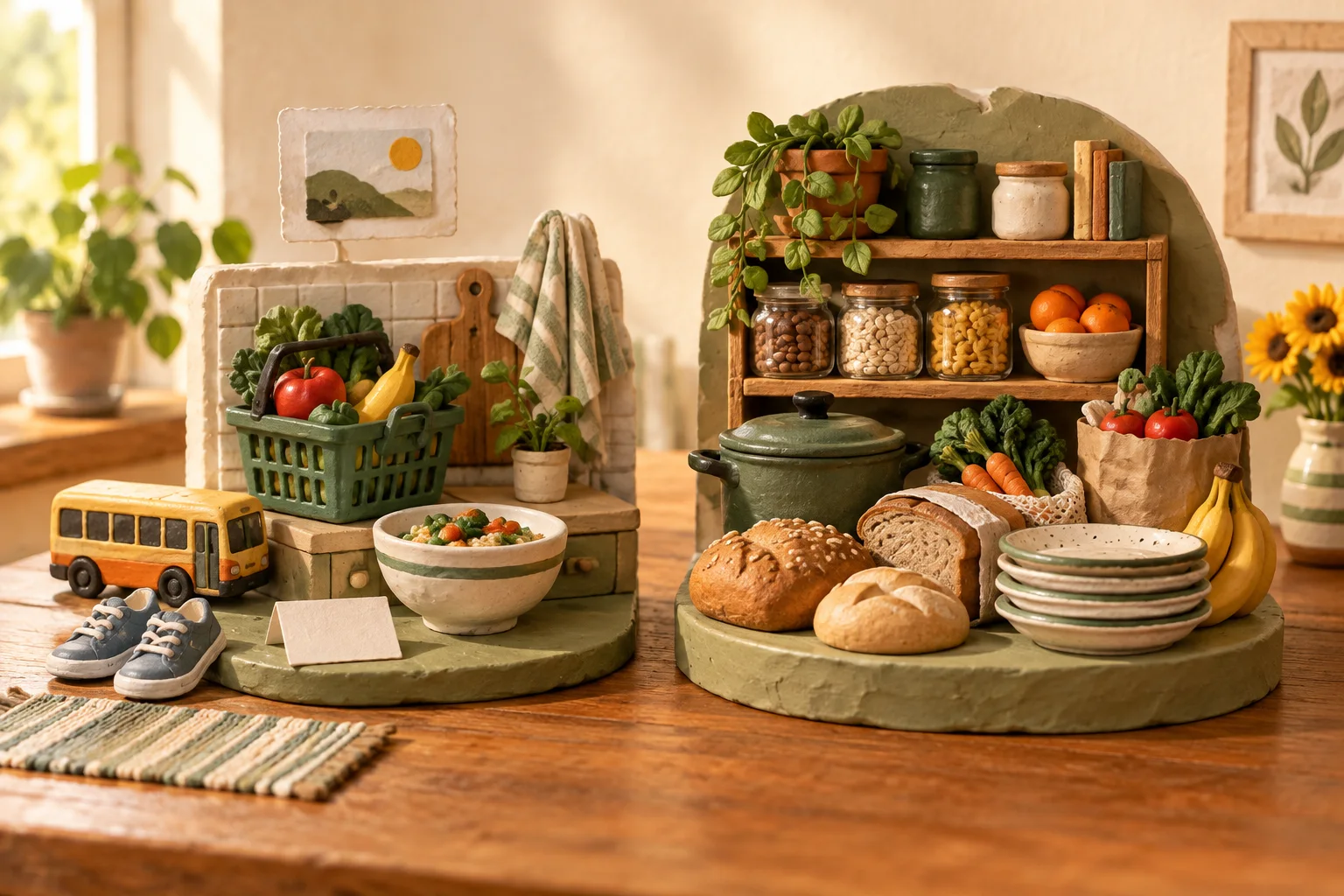
Before You Compare Grocery Budgets
A weekly total leaves out important details. Check whose food it covers, which meals are included and what shopping requires before treating it as a target.
Recipes & Cooking
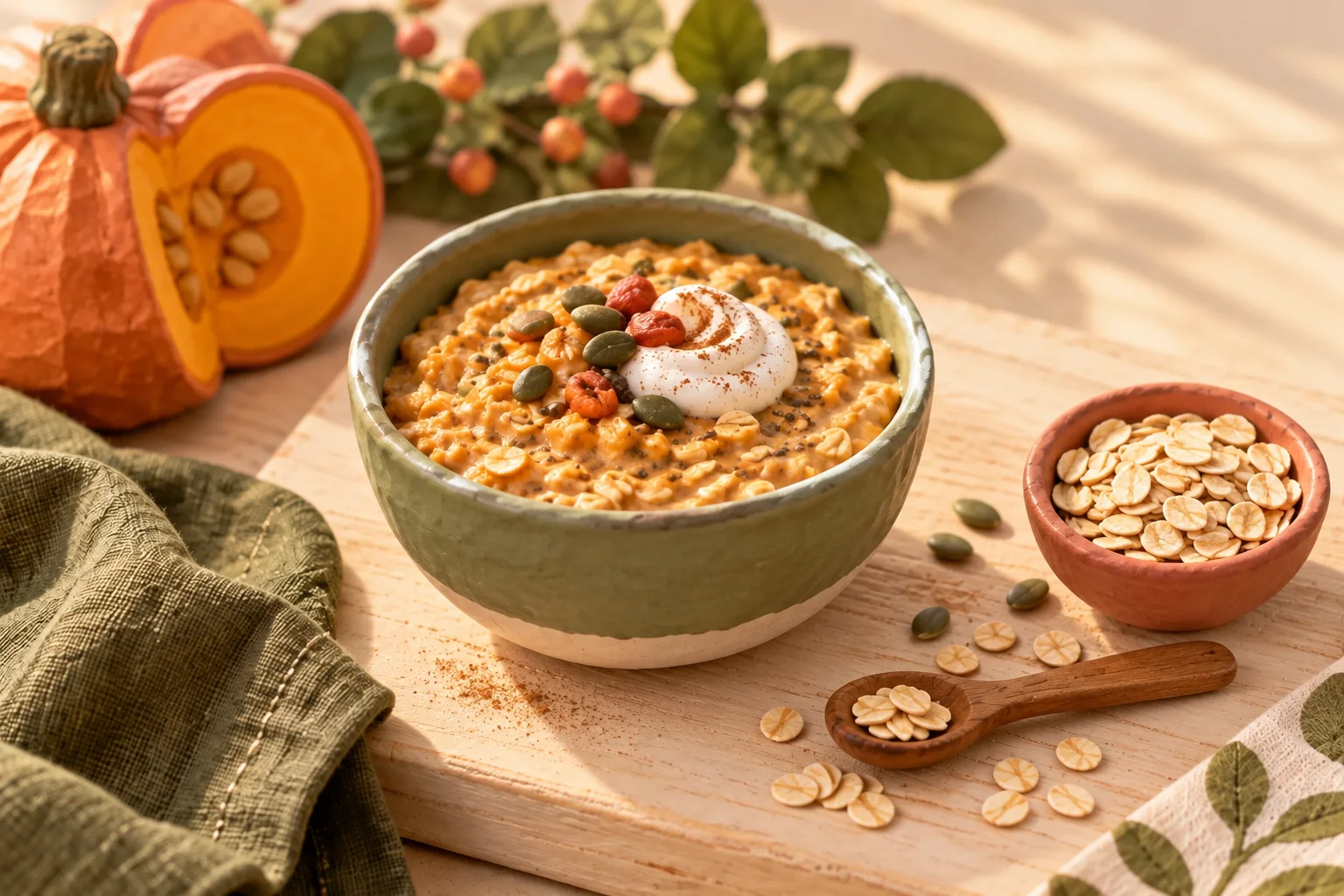
Give Chia a Head Start
The useful lesson in pumpkin overnight oats is the order: hydrate the chia first, then add the oats for a smoother make-ahead breakfast.

Everyday Habits
Keep the Routine, Change Its Setup
When your surroundings change, separate what you value in a food routine from the room, equipment or timing that made it possible.
Everyday Habits
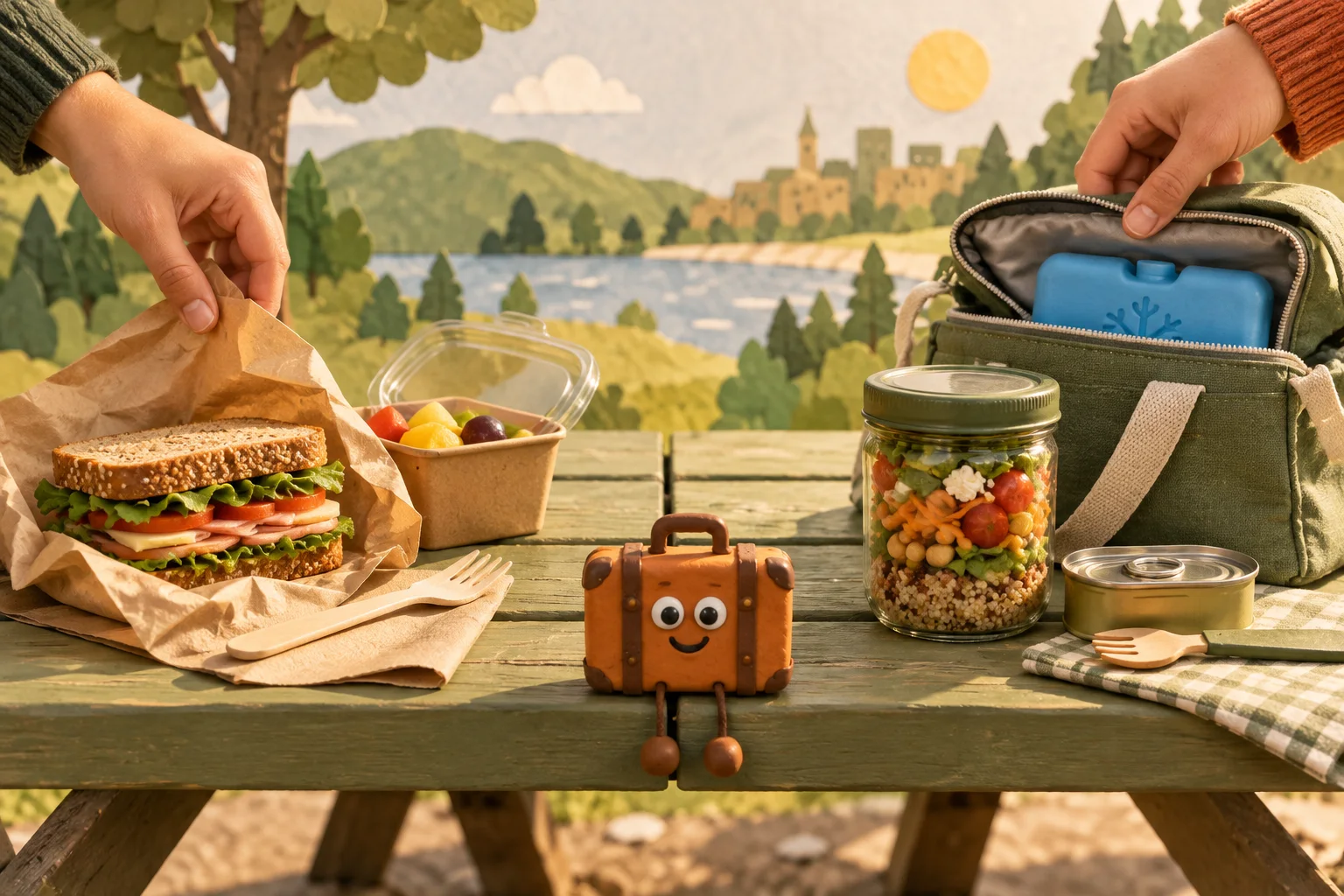
Lunch Without a Kitchen Starts With Storage
Buying something to eat now and carrying it for later are different lunch plans. Check storage and the few tools you need before choosing.

Health Research
A Habit Study Is Not Your Personal Deadline
A widely cited habit study estimated changes in automaticity. Its numbers are useful context, not a countdown for your own routine.
Everyday Habits
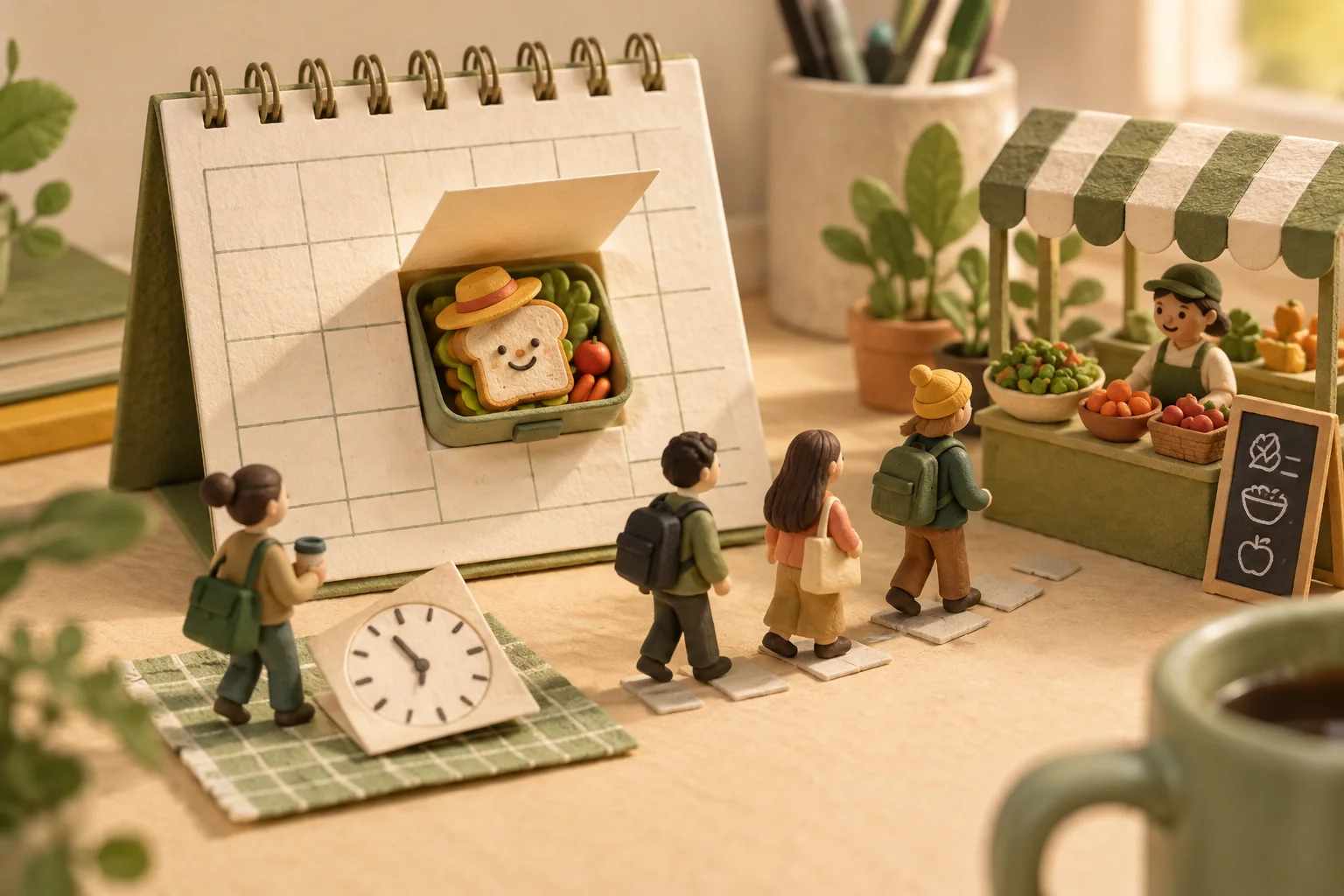
Give Lunch a Place in the Workday
A gap in the calendar is only part of a lunch plan. Check where the food will come from and what changes if the day runs late.

Everyday Habits
Notice the Snack Before You Change It
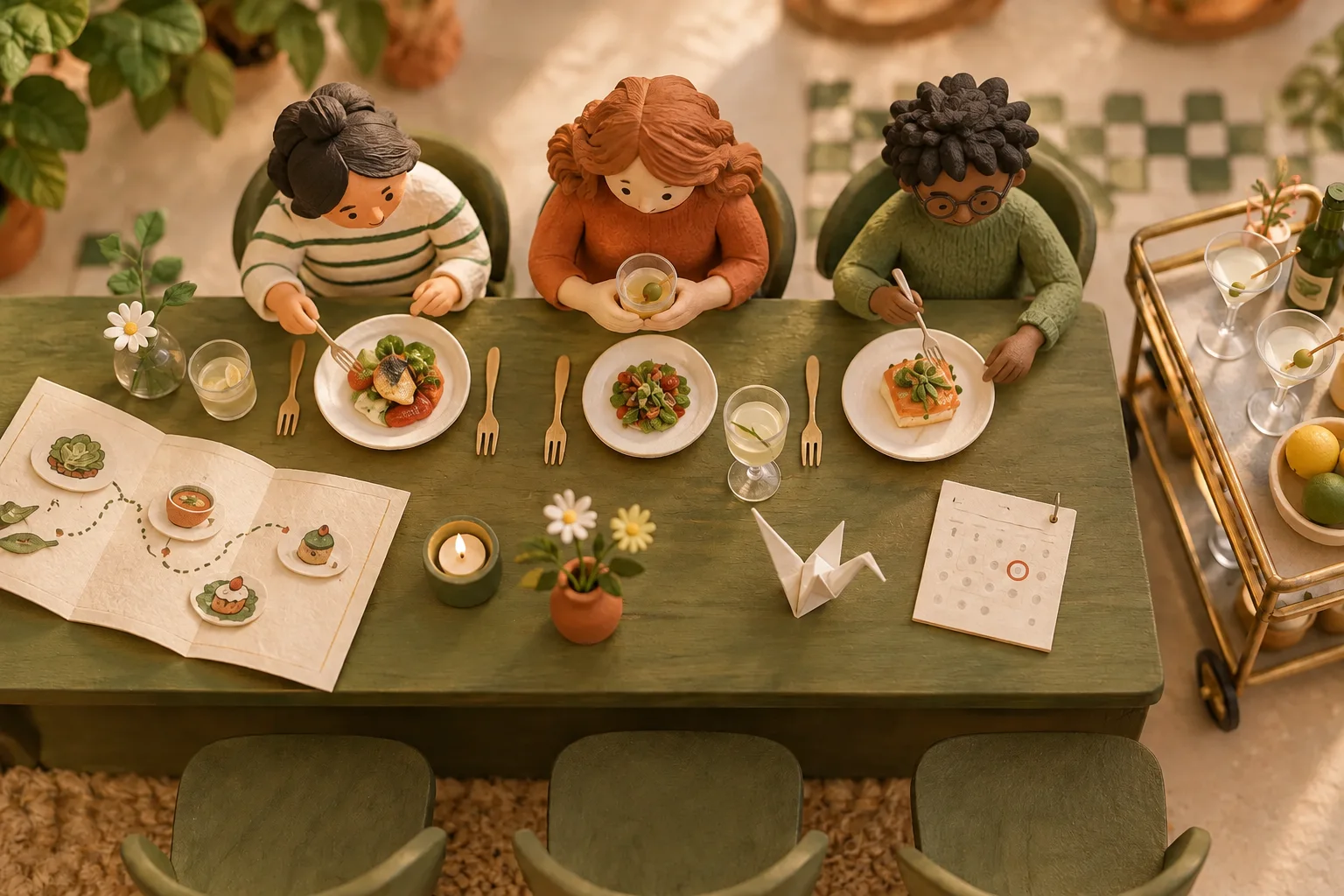
The same afternoon snack can fit very different days. Three imagined situations offer a way to notice access, timing, and enjoyment before deciding whether anything needs changing.
Food & Drink Culture
When Fine Dining Tries to Become Routine
Lower prices are only part of the change. Some restaurants are simplifying service and menus so diners can understand, shape, and repeat the cost of a meal.
Everyday Habits
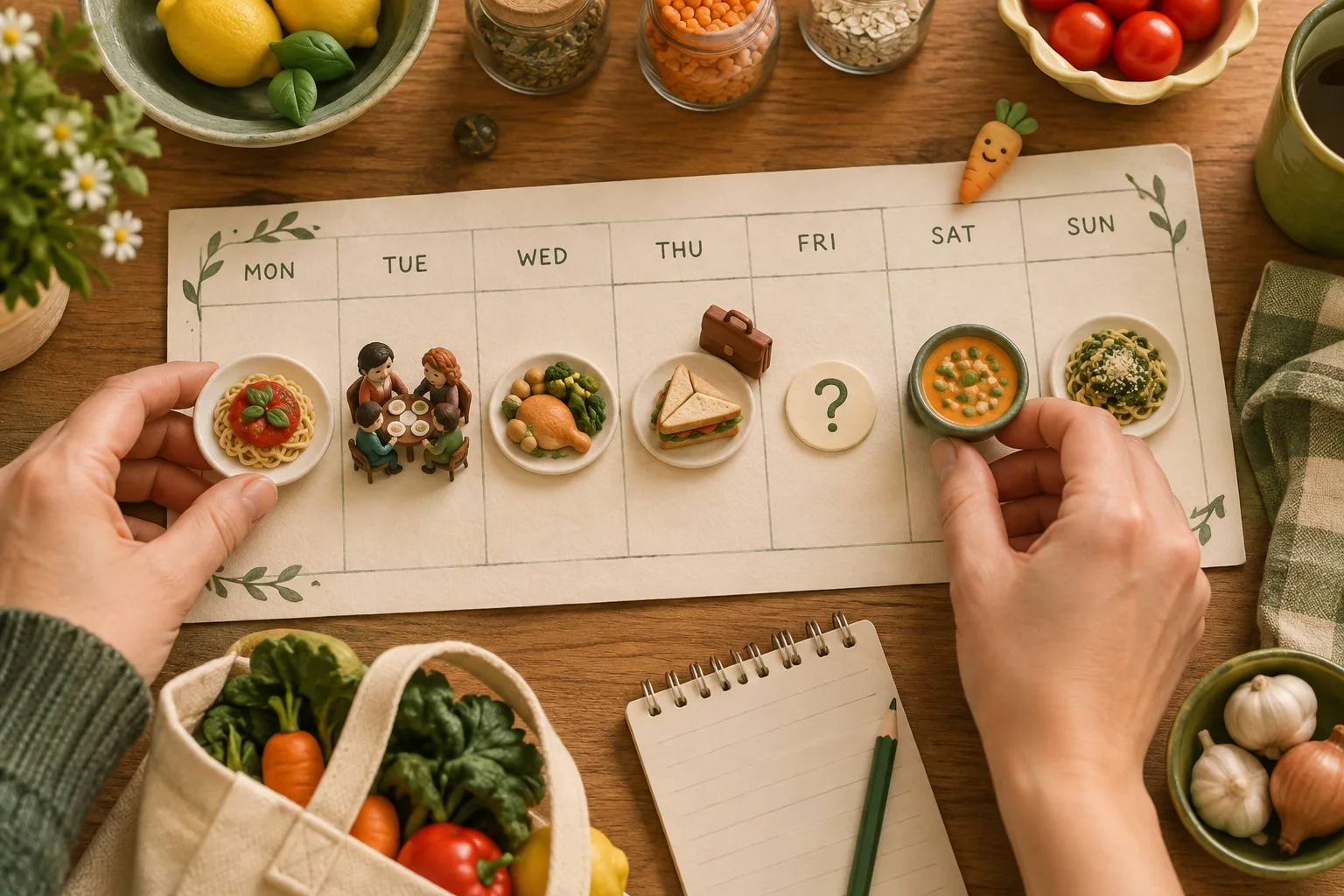
Shop for the Week You Actually Have
Two dinners away from home can change the shopping list. Start with the meals you expect to make, then check what is already there.
Recipes & Cooking
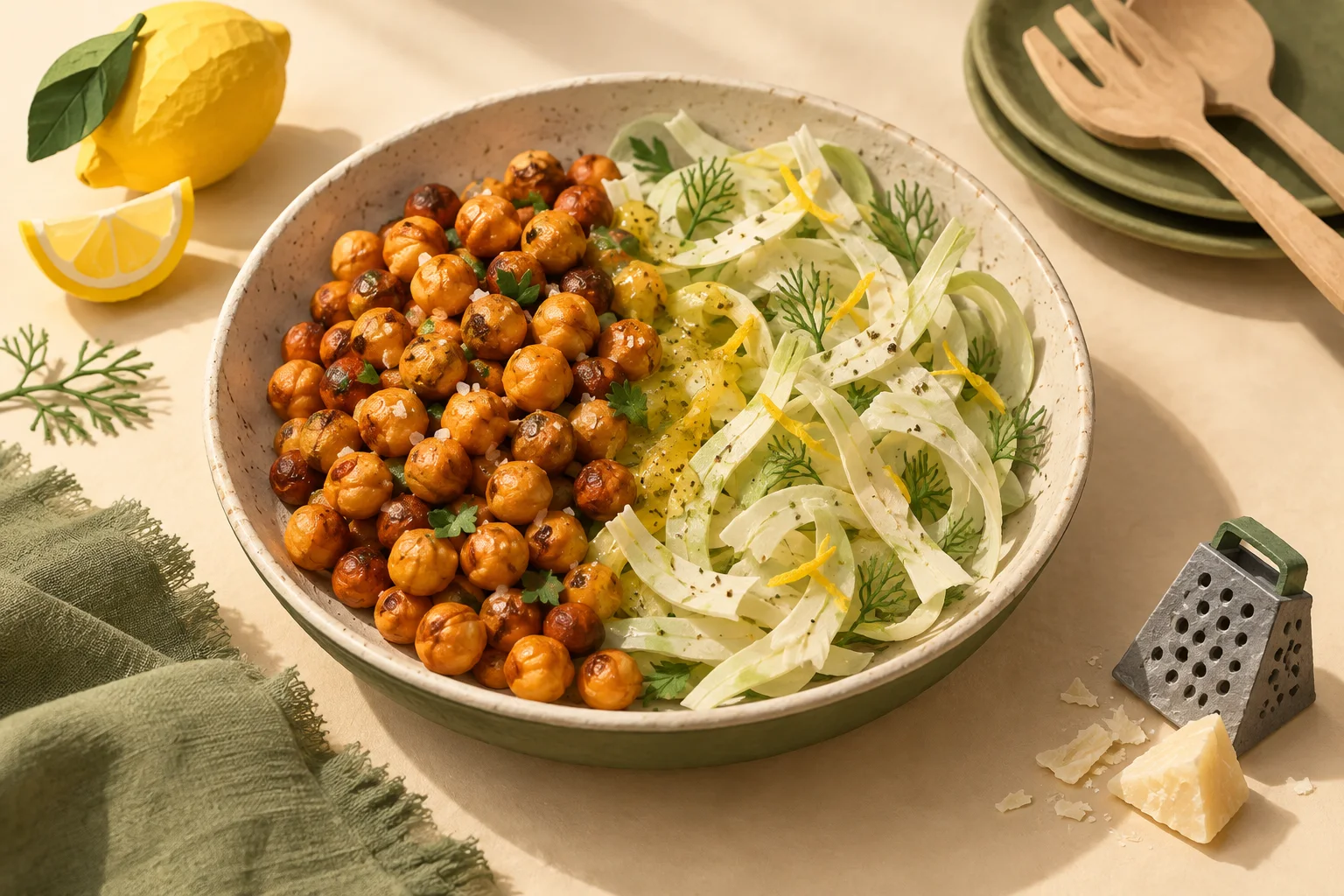
Make a Salad Work in Two Kinds of Crunch
Roasted chickpeas and shaved fennel do different jobs, turning a simple salad into a study in contrast rather than a pile of equally crisp ingredients.

Recipes & Cooking
Keep One Part of the Braise Out of the Sauce
Chicken scarpariello shows how a skillet dinner can deliver a glossy, tangy braise and crisp potatoes by giving each component its own finishing path.
Food & Drink Culture
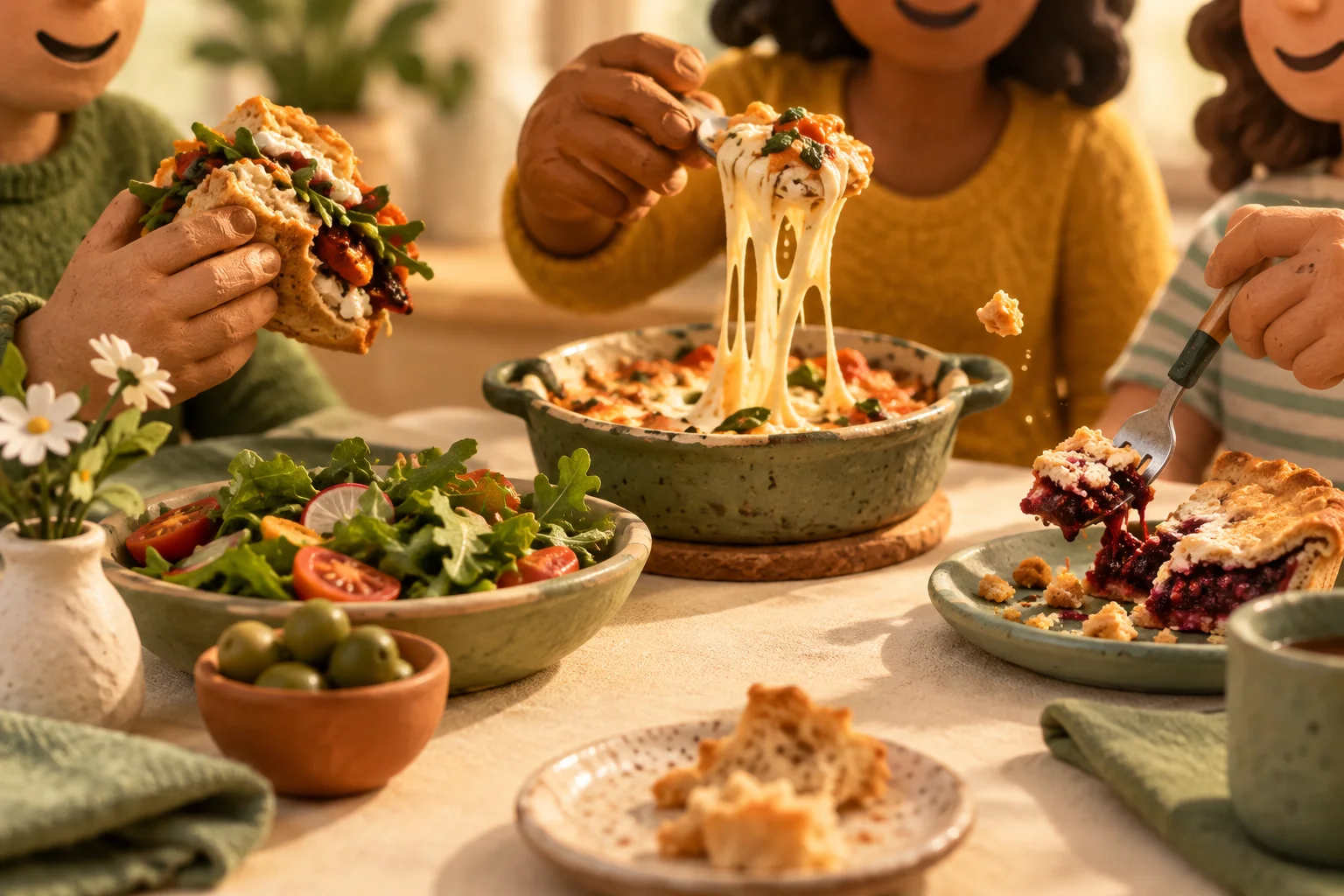
Eating Is Not a Performance
Food videos have trained viewers to expect tidy, instantly readable reactions. Nigella Lawson’s big bites expose how artificial that visual language can be.
Health Research
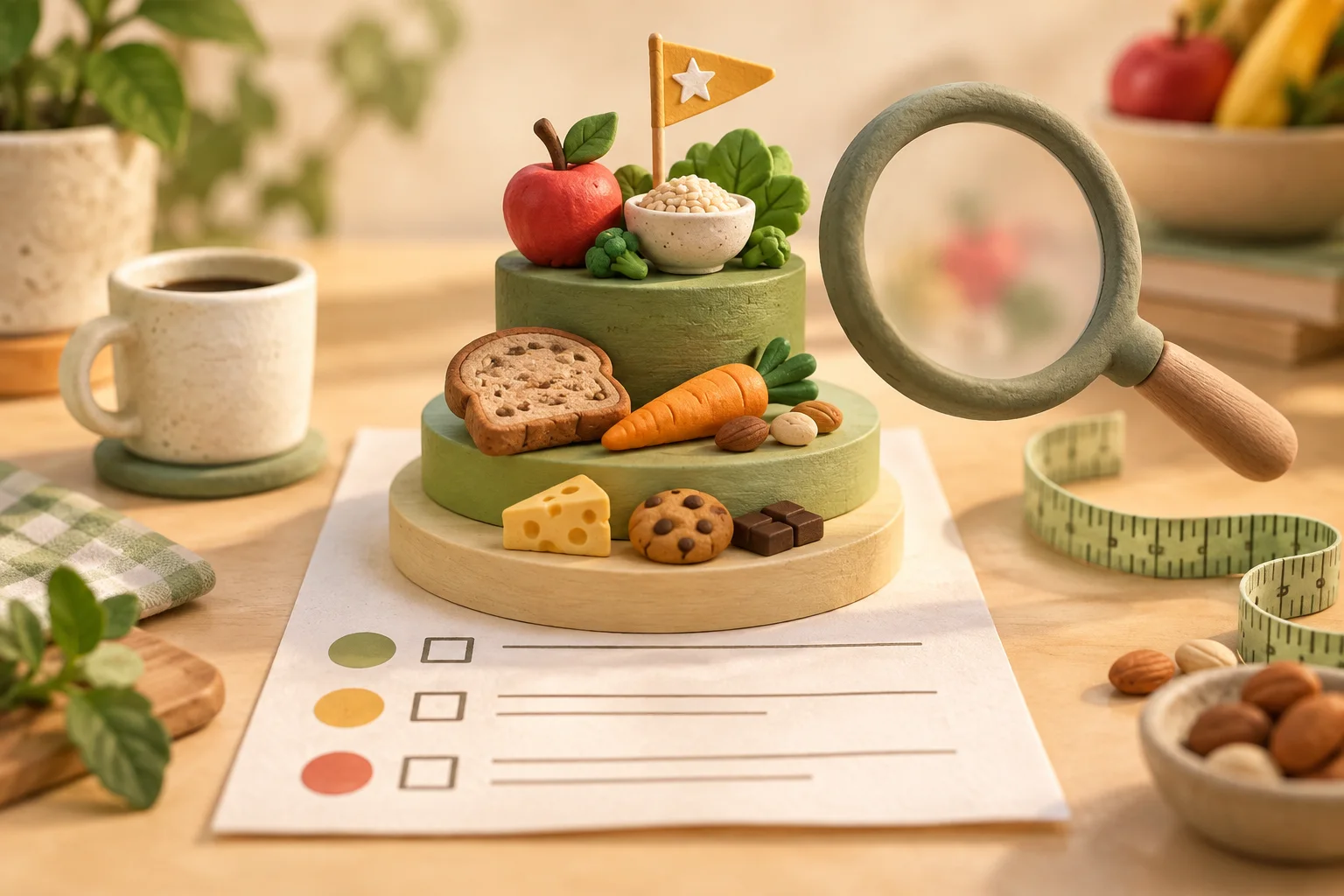
A Food Questionnaire Can Rank Better Than It Measures
Food-frequency questionnaires can sort people into broad intake patterns, but they are much shakier as precise measuring tools. That changes how diet headlines should be read.
Health Research
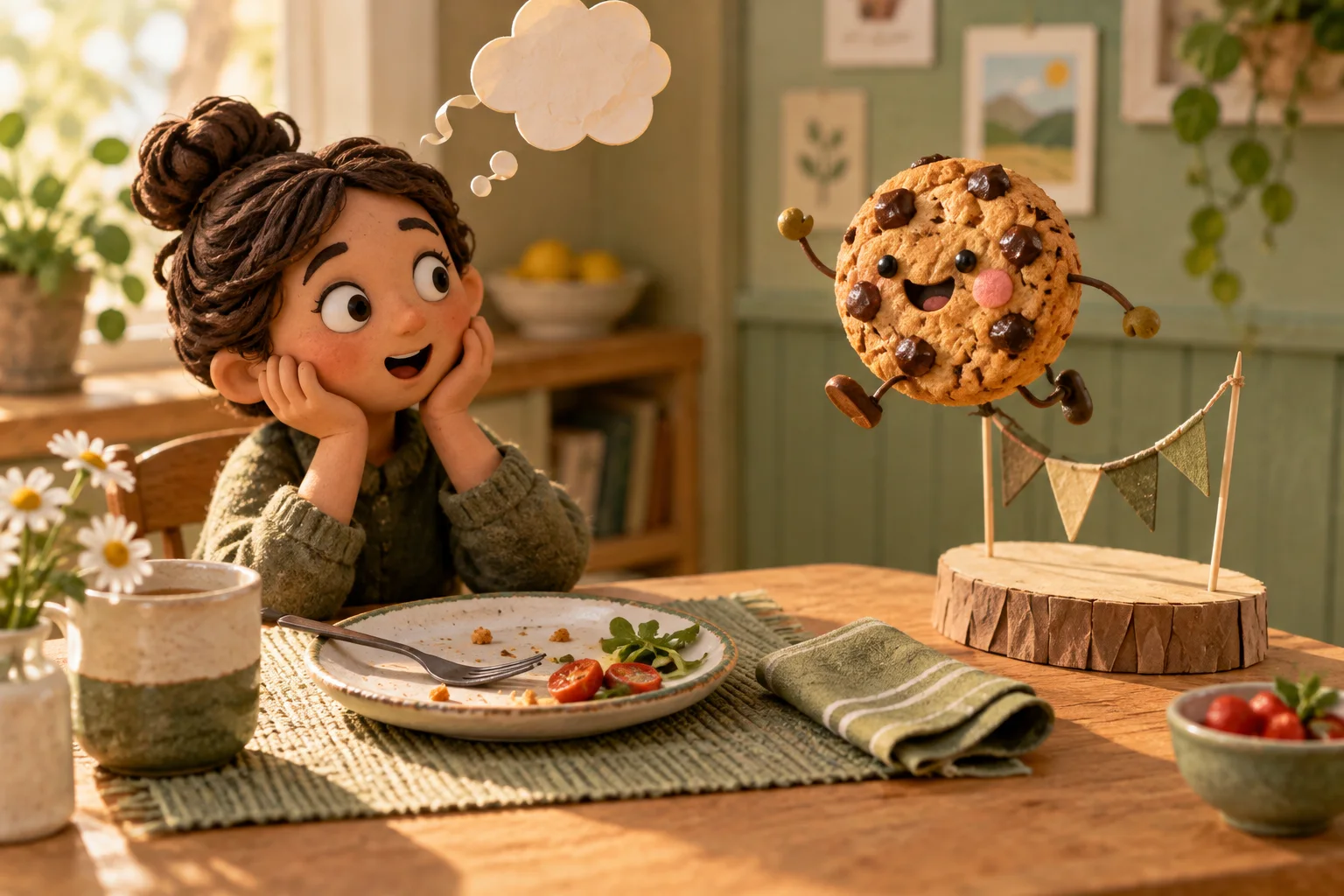
Fullness Does Not Make Food Cues Invisible
Two lab experiments found that snack cues could disrupt attention even after eating. The effect measured a split-second response, not appetite or behavior.

Health Research
An Exercise Estimate Is Not a Personal Minimum
A study's nine-to-ten-hour exercise figure came from a statistical model and a combined cardiovascular outcome. Three questions help put that number in perspective.
Recipes & Cooking
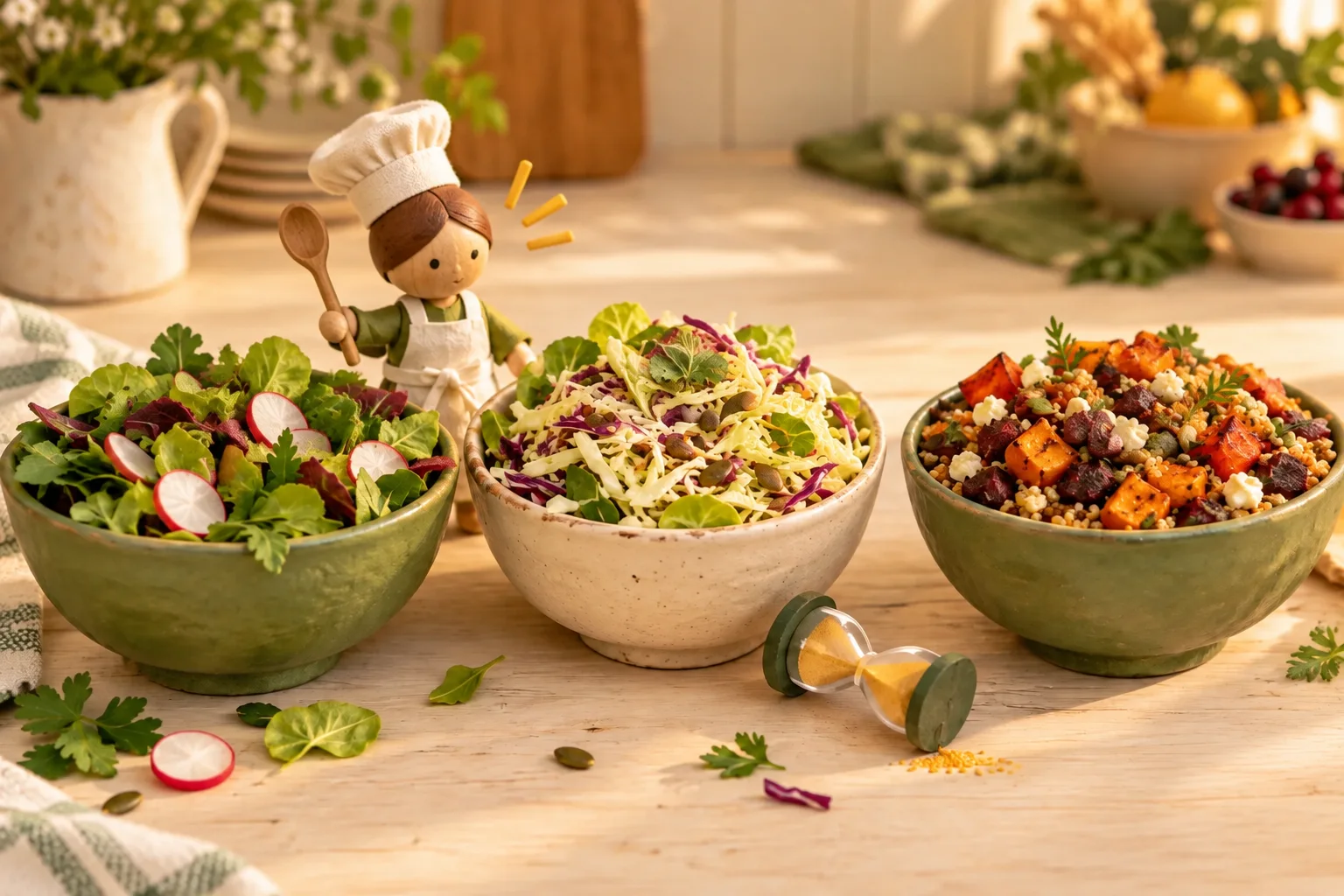
Choose a Holiday Salad by How It Waits
The best salad for a crowded holiday table is not just the one that sounds good. It is the one whose texture fits when and how you can serve it.

Health Research
Why Weight Regain Is More Than Willpower
Research reviews describe biological pressure toward weight regain after loss, but a brain 'memory' is a shorthand—not a guarantee of what any one person will experience.