 Steady Bites
A good salad does not need a long ingredient list. It needs contrast. One useful way to build that contrast is to give two crisp ingredients completely different jobs.
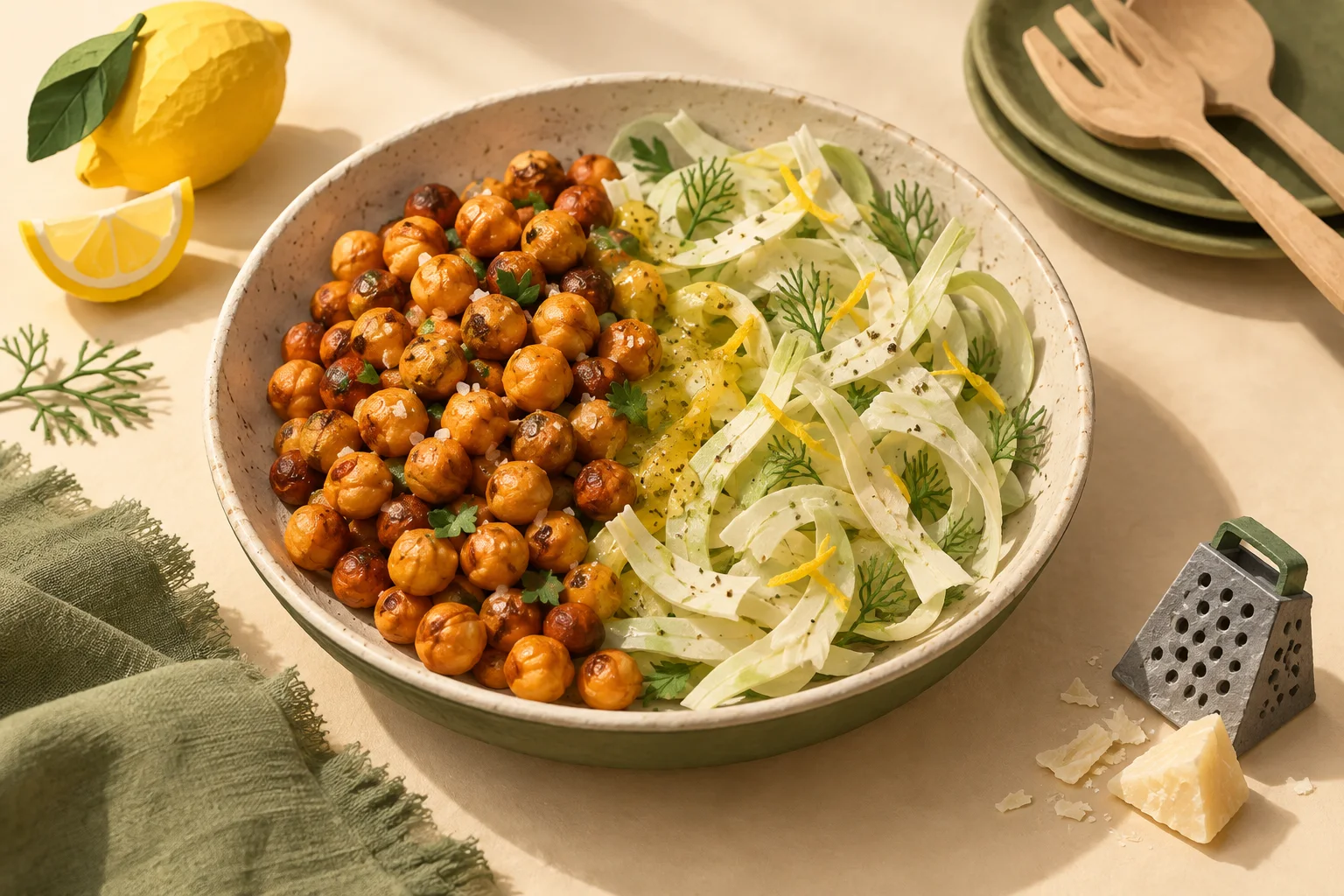
In Zola Gregory's chickpea and fennel salad for TASTE, chickpeas become the warm, savory crunch. They are rinsed, drained, dried thoroughly, coated with olive oil, and roasted at high heat. Drying matters because surface moisture works against browning and can make hot oil splatter. The target is not a hard, dry chickpea. Gregory looks for a crisp exterior with a slightly soft center.
Fennel supplies the second texture. Instead of going into the oven, it is sliced very thin so a lemon-Dijon dressing can season and soften it without erasing its fresh snap. Thinly sliced red onion gets a cold-water soak to temper its sharpness. Pecorino adds a salty finish.
The larger lesson is a flexible one: decide what each crisp ingredient contributes before combining them. Let one component bring toasted depth and another bring freshness. Then use an assertive dressing to connect them. If every ingredient is roasted, the salad can feel uniformly soft and warm. If everything stays raw, it may lack a savory anchor.
This approach is especially useful between seasons, when the produce drawer may hold both warm-weather vegetables and sturdier fall ones. Start with the textural roles, then choose ingredients that fit what you have. For exact quantities and timing, follow Gregory's linked recipe.