 Steady Bites
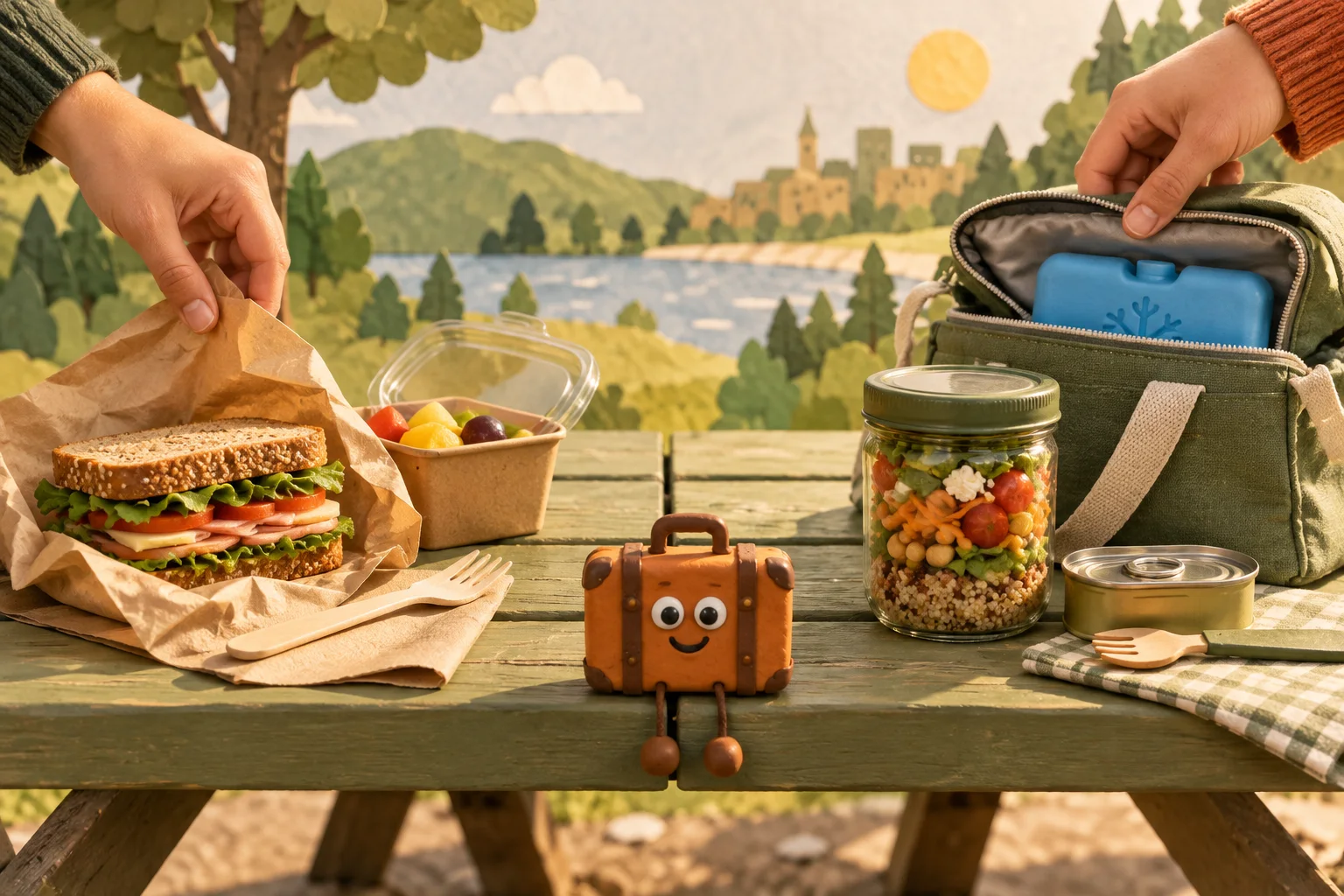
A lunch bought beside the place you will eat has a different job from one carried through several hours of travel. When there is no kitchen, start with that difference rather than searching for a clever recipe.
Imagine two versions of a day with a nearby shop. In the first, you can buy food when you are ready to eat. Choose something intended to be eaten without cooking or reheating, and check what you need to open and eat it. A container without a spoon, or a tin without an opener, can leave part of lunch out of reach.
In the second version, you must buy lunch earlier and carry it. Storage now belongs in the decision. Will there be reliable cold storage, or must the food stay suitable without refrigeration? Read the package's storage and after-opening instructions rather than assuming that every sealed product can travel unrefrigerated.
The University of Minnesota's Cooking without a kitchen guide organizes options around the equipment available, including situations without cooking equipment. Its temporary-housing and emergency contexts make a useful practical point: choose for facilities you actually have.
For perishable food, US FoodSafety.gov guidance says to keep refrigeration at 4°C (40°F) or below. Do not leave perishables unrefrigerated for more than two hours, reduced to one hour above 32°C (90°F). Those are limits, not a reason to plan around leaving lunch warm.
If carrying the meal cannot meet its storage needs, buying nearer eating time or choosing an option that does not require refrigeration may fit better, where available and affordable.
Then return to what sounds enjoyable. The task is to match lunch to access, storage and utensils, not to make eating without a kitchen a test of ingenuity.