 Steady Bites
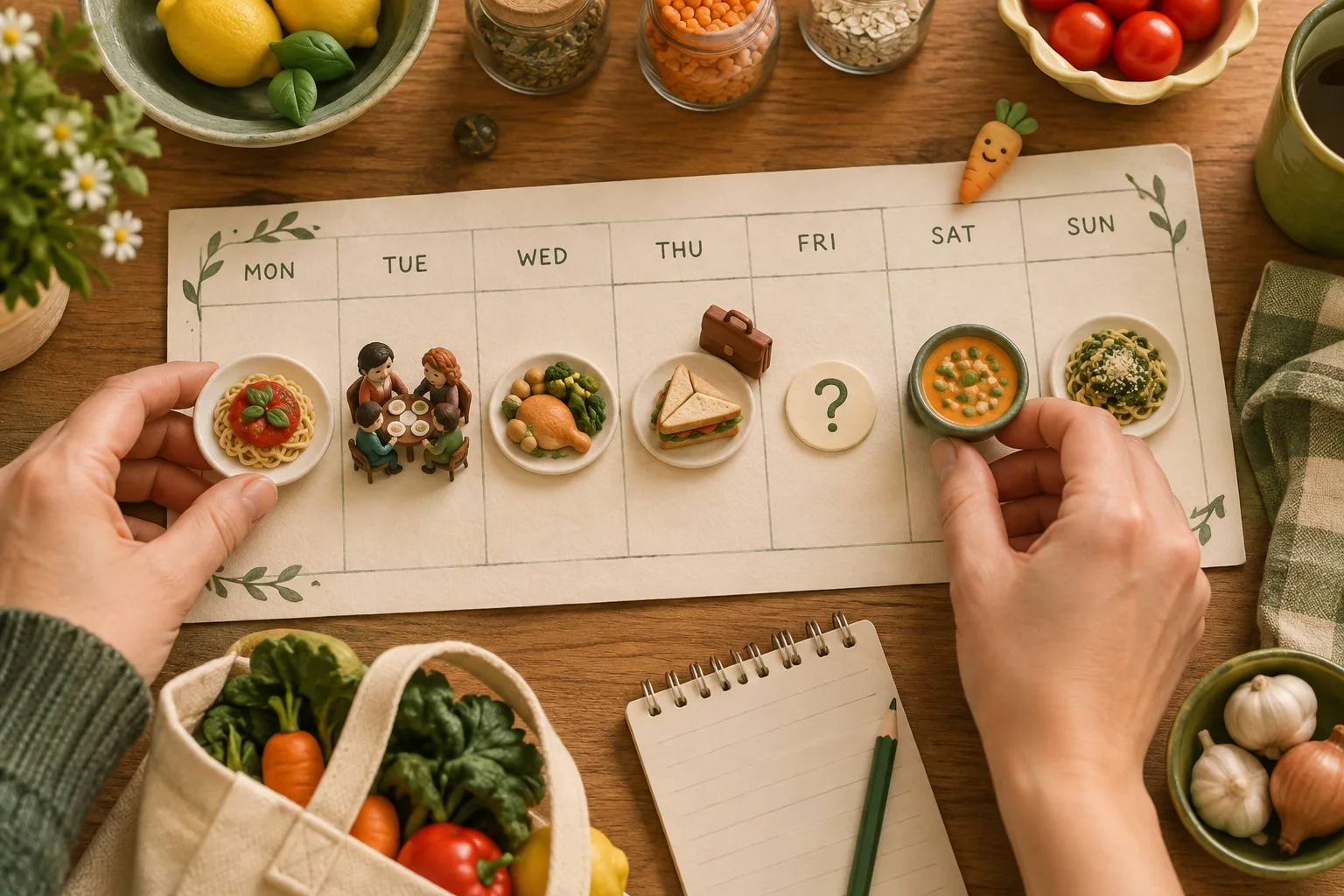
Before adding food to a shopping list, try writing down the meals you expect to eat at home. Include who will be there and which days leave you time to cook. A week on paper can look quite different from seven empty dinner plates.
Imagine shopping for one person who will eat with friends on Tuesday and at work on Thursday. That leaves five dinners at home. One evening also involves a late return, so an elaborate meal would be an awkward choice for that slot.
You now have something concrete to shop against: four evenings with room to cook and one that needs an easier option. Breakfasts, lunches and snacks still belong on the list where you need them. The exercise is about matching purchases to occasions, not reducing how much you eat.
The UK's Just One Norfolk NHS guidance suggests planning what you will eat each day before writing a list. The University of Minnesota's Before you shop adds another useful check: look at the ingredients already available and buy with their intended use in mind.
Return to the imagined week. If you already have the ingredients for one dinner, take those repeat purchases off the list. If you were about to buy ingredients for seven separate dinners, reconsider the two whose evenings are spoken for.
Leave uncertain plans visible. A question mark beside Friday is more honest than a meal you already suspect you will not make. You might choose an option you regularly use, or decide later if another shopping trip is practical.
Use the span that suits your shopping access, whether that is two days or a week. Before buying an extra ingredient, give it a likely meal and a likely day.