 Steady Bites
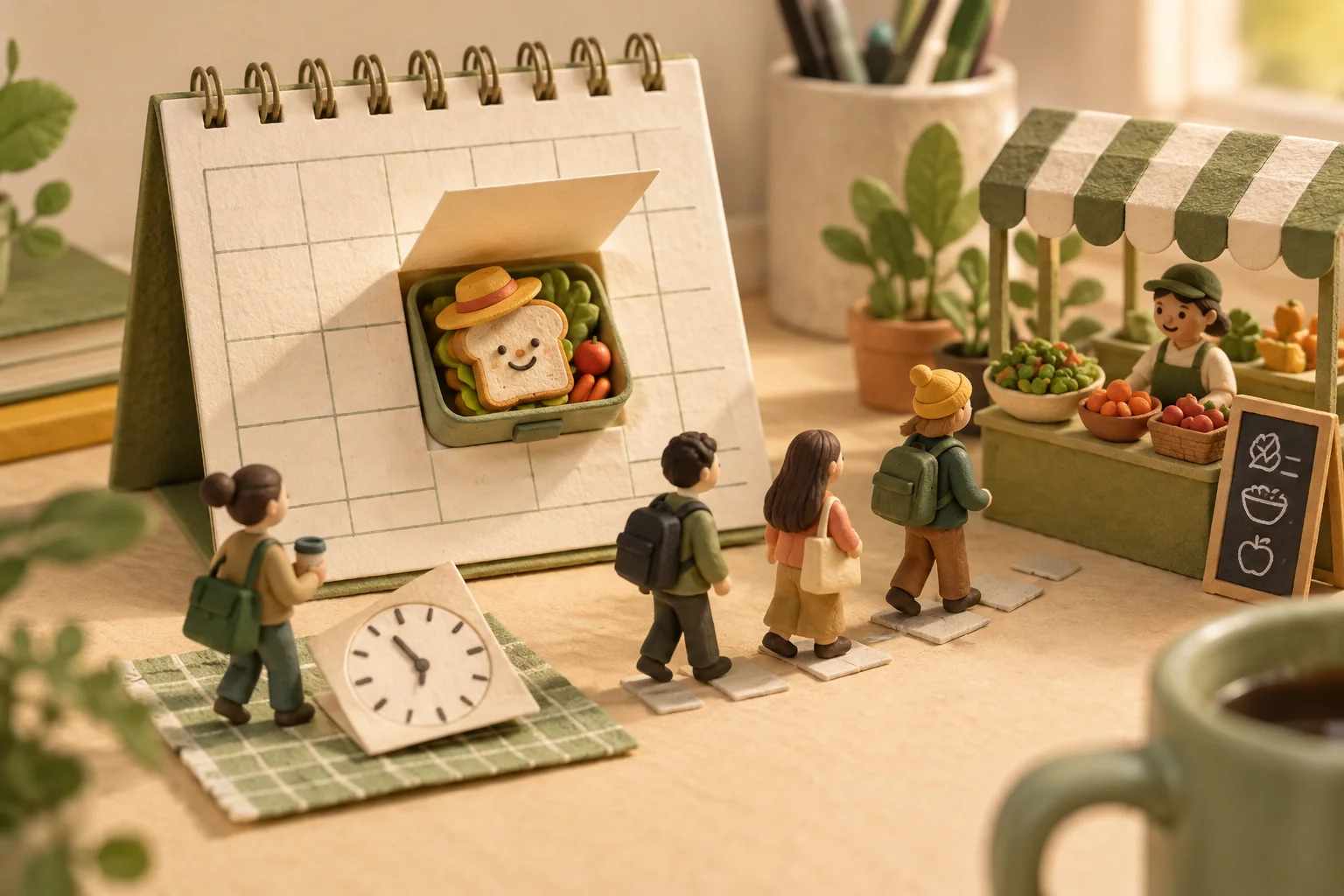
Imagine a twenty-minute break between two meetings. The nearest place to buy lunch takes ten minutes to reach. The calendar has a gap, but getting food would use most of it.
Try planning the opportunity to eat before choosing the meal. For one upcoming workday, ask: when might I stop, where will I be, and what food can I actually get there?
Australia's Better Health Channel recommends planning shopping and preparation for work lunches, and choosing food you enjoy. You can extend that practical idea to the time and access around lunch, whether you bring food or buy it.
On a day when you control your calendar, you might reserve a break that includes the walk, queue, or preparation involved. If an early meeting often runs over, consider whether another available break would work better. There is no ideal clock time to aim for in this exercise.
On a shift where someone else sets the breaks, the useful question may be different: what will still be available when you are released? If the nearby counter closes early, identify another option within your budget and reach. A reminder cannot create staffing cover or permission to stop; those constraints deserve attention in their own right.
Keep the backup specific. For example: if there is no time to leave the building, I can use the canteen that is open during my break. If that option does not exist, the plan needs a different answer.
Afterward, notice which part was difficult: finding time, reaching food, waiting, or getting started. Change that part for the next comparable day. You can keep a lunch you like while making more realistic arrangements around it.