 Steady Bites
Your food arrives. You move a glass, unfold a napkin and open your messages. There may be nothing urgent to check; picking up the phone has simply become part of getting settled.
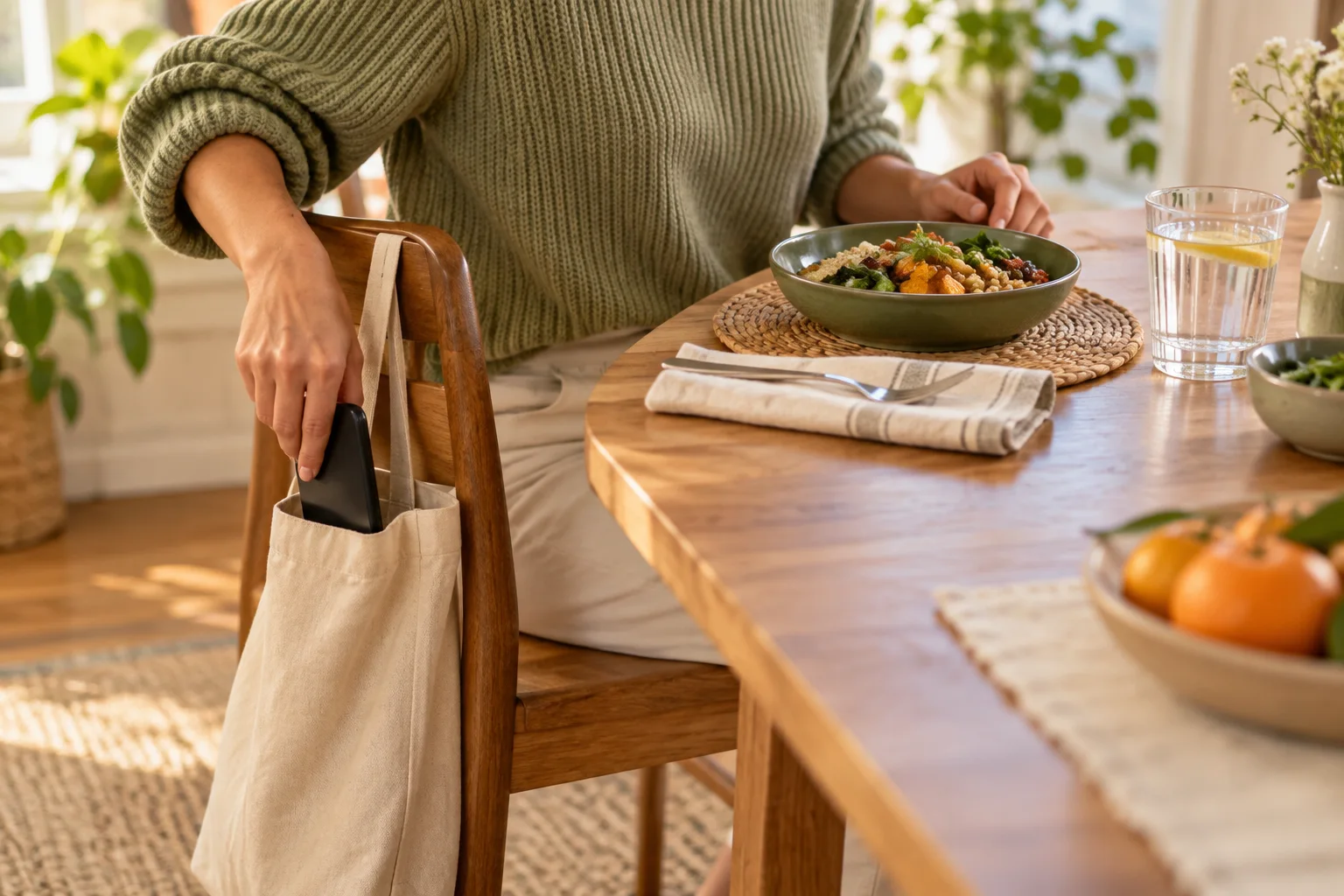
If you would rather spend that meal differently, try making one decision before the first bite: where will the phone wait? A pocket or bag might work better than a spot beside the plate. Choose somewhere practical, not somewhere that prevents you from receiving contact you need.
Health Canada's guidance on taking time to eat recommends eating without electronic distractions and paying attention to food's aromas, textures and flavours. You can try that with one ordinary meal, without turning every meal into a screen-free commitment.
When eating with someone else, make it an invitation rather than a test: “Shall we put our phones away while we eat?” Agree on any exceptions. Someone waiting for a call may need their phone nearby. That does not make their company less valuable, and reaching for a device is not an invitation to monitor each other.
Give checking a place in the plan too. Perhaps you will read messages after finishing, rather than whenever there is a pause in conversation. If a phone is needed for communication or accessibility, keep that use available. The experiment is about optional checking, not removing a useful tool.
The NIDDK's habit-change guidance suggests starting with small changes and planning around obstacles. Here, the small change is choosing the phone's place in advance, not changing your food.
Afterward, ask whether you liked that version of the meal. Keep it, adjust the arrangement, or leave it. There is no streak to protect and no need to prove that you can ignore your phone.