 Steady Bites
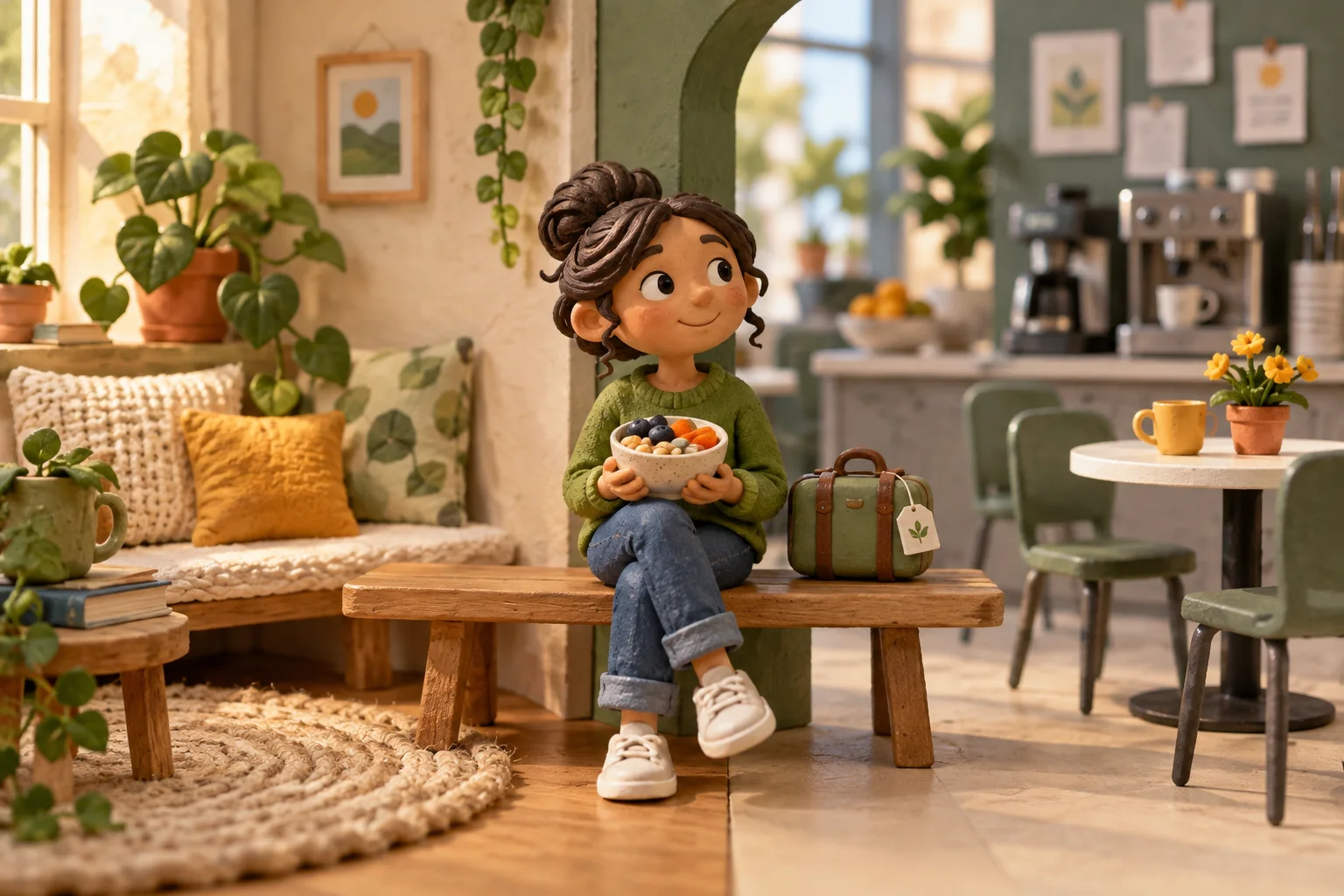
Which part of a familiar food routine would you actually miss in a new place? Answering that can be more useful than trying to reproduce every detail.
Imagine someone who works from home. After a regular afternoon call, they take a snack into another room and spend a few minutes away from their desk. They like both the food and the quiet pause.
Now imagine the same person working in an office. The call still happens, but the kitchen is shared and the only available seating is noisy. Bringing the same snack preserves one part of the routine, not necessarily the part they valued most.
Try separating the routine into three decisions: what to keep, what can change, and what needs checking. In this example, keeping a pause away from work matters more than using the same room. The location can change. Whether a suitable space is available, and whether the person can take a break there, needs checking rather than assuming.
The NIDDK's guidance on changing habits recommends planning for disruptions, including travel and eating away from home. Harvard's Meal Prep Guide also recognizes that planning methods differ with preferences, skills and schedules. Neither establishes that this imagined transfer will work; it is an optional planning exercise.
Your answer might be different. If company is what you enjoy, finding someone to eat with may matter more than finding a quiet corner. If the familiar food is the attraction, access to it deserves attention first.
After trying the new arrangement, ask whether it kept the part you cared about. You are adapting an existing routine, not testing whether you can recreate home perfectly.