 Steady Bites
Eating on camera is rarely just eating. It has become a small performance with recognizable cues: a neat bite, an exaggerated chew, a nod, perhaps a finger lifted toward the lips. The reaction must read instantly, even with the sound off.
That helps explain why Nigella Lawson's first appearances as a judge on The Great British Baking Show prompted commentary about the size and awkwardness of her bites. In Bon Appétit, Wilder Davies argues that Lawson has eaten with the same visible pleasure throughout her television career. What changed was not her style, but the visual grammar surrounding food online.
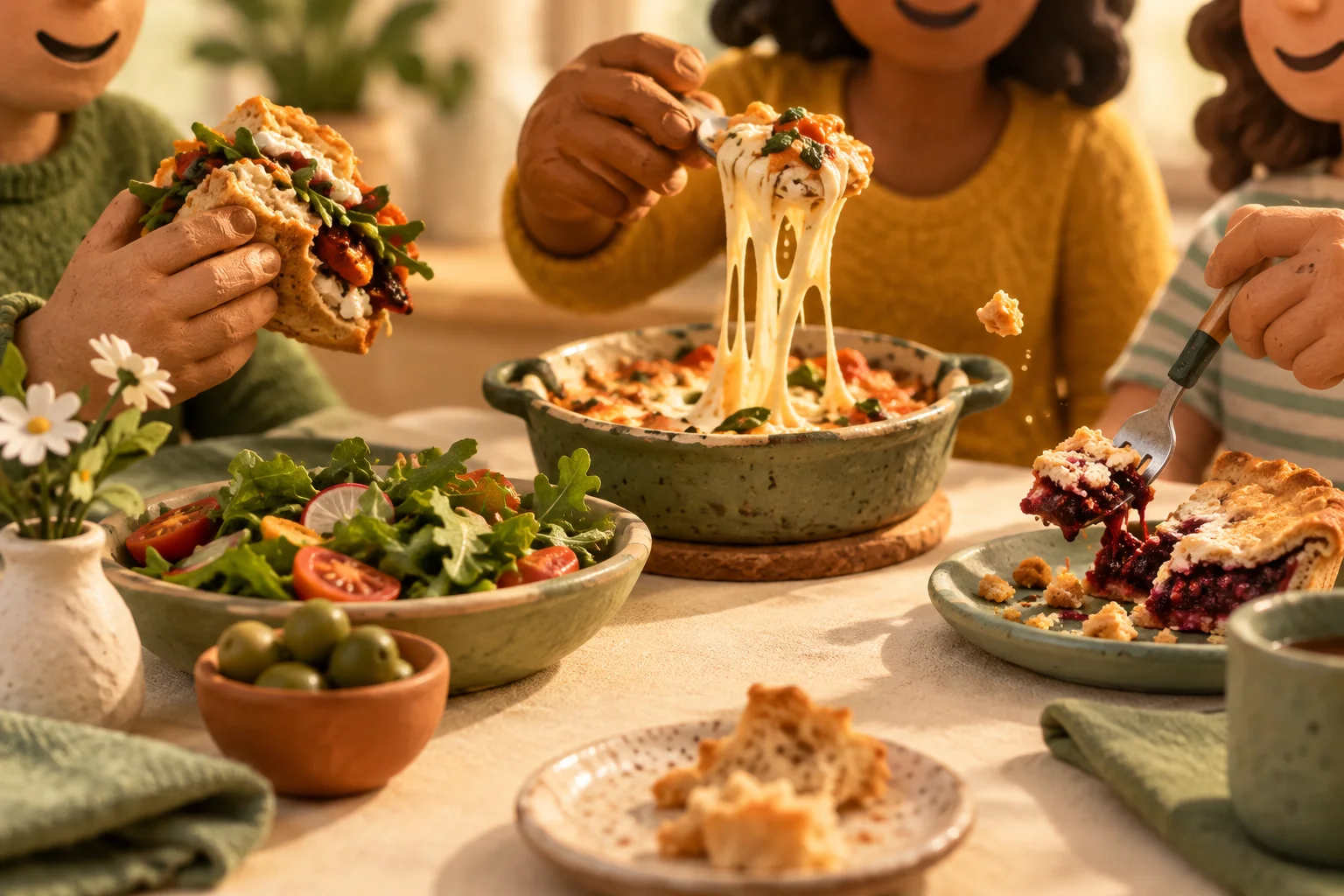
Influencer videos often compress tasting into a polished signal. Every movement has to communicate approval cleanly. At the other extreme, spectacle-driven eating makes excess itself the performance. Both formats can make ordinary eating look strangely unruly by comparison. A bite that is too large, a cheese pull that will not cooperate, or a mouthful that interrupts the sentence suddenly seems like a failure of presentation.
Lawson's value in this setting is not that everyone should copy how she eats. It is that her unpolished enthusiasm separates pleasure from display. Davies notes that her cooking programs have long paired practical improvisation with direct enjoyment of the result. The food is something to taste, not merely a prop for the correct reaction.
That distinction matters beyond television. Meals are physical and sometimes awkward. Foods drip, crumble, stretch, and resist tidy bites. Treating those moments as normal leaves more room to notice the food and the company, rather than monitoring how enjoyment appears from the outside.