 Steady Bites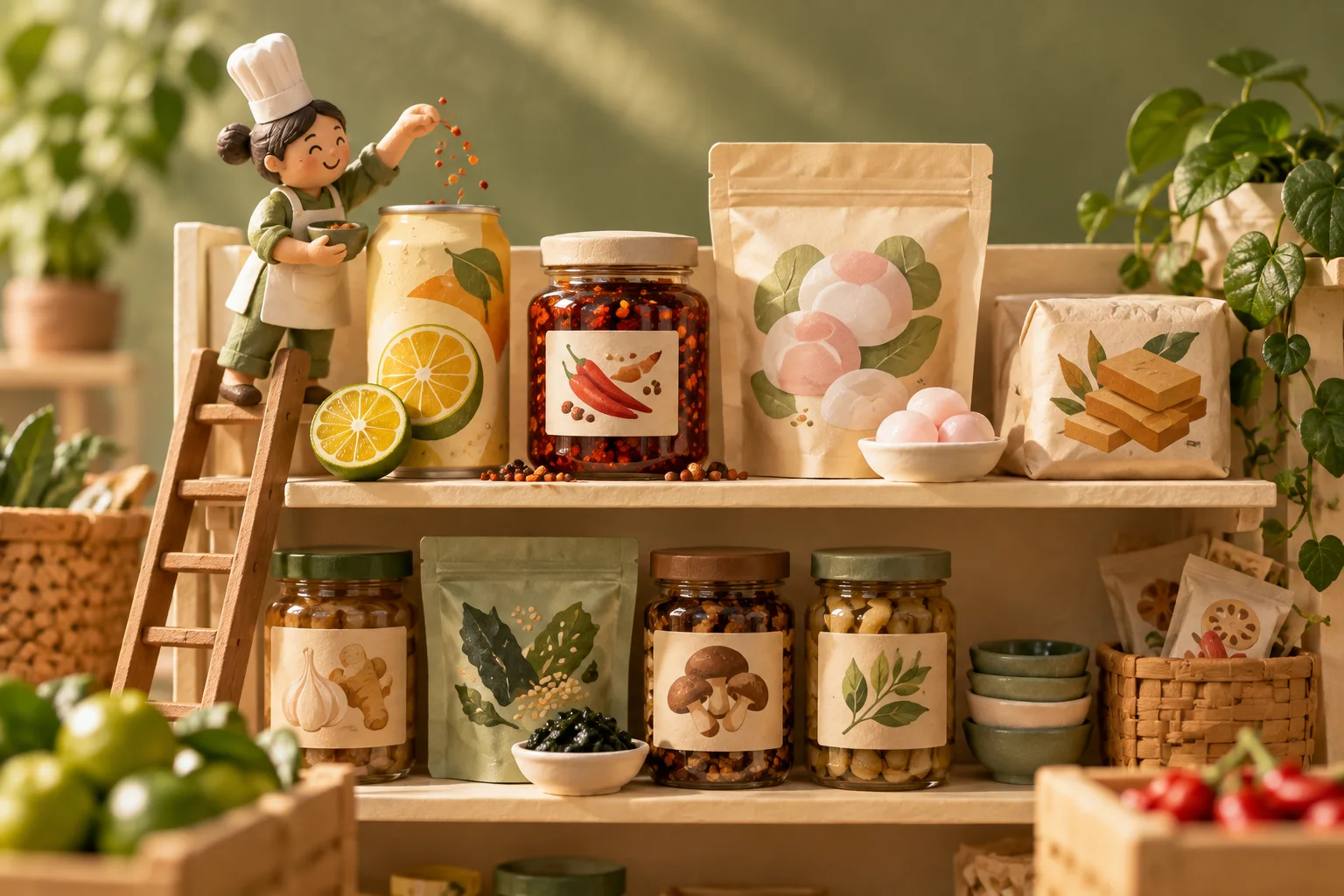
For years, a packaged food was often treated as more marketable when its identity became less specific. The recent growth of Asian American grocery brands suggests another route: explain a particular flavor, texture, or pantry tradition clearly enough that unfamiliar shoppers can meet it on its own terms.
TASTE reports that Jing Gao was rejected by at least 100 investors before crowdfunding Fly By Jing's Sichuan chile crisp in 2019. The brand now reaches more than 12,000 stores. Its influence is visible not only in competing chile crisps, but in the confidence of newer founders building products around calamansi, dry tofu, the chewy texture known as QQ, and regionally specific condiments.
The products do more than move an existing food into brighter packaging. They often teach shoppers a new way to recognize it. Sanzo presents calamansi alongside familiar seltzers. TofuGo frames shelf-stable dougan as a portable snack. KiuKiu leads with the bouncy texture of glutinous rice flour rather than trying to make it disappear. Social media helps because a short cooking demonstration can show what a product does, not merely what its label says.
Visibility, however, is not the same as durability. The article also traces brands that vanished after fast expansion or lost important retail placements. Founders describe turning down opportunities when production and current partnerships could not support them. Rising ingredient, shipping, and tariff costs make that restraint more than a branding choice.
The meaningful change is therefore larger than any one trendy condiment. A mainstream grocery shelf can hold foods that remain culturally and regionally legible. The open question is whether retailers and investors will support those products long enough for recognition to become routine, rather than treating specificity as a brief novelty.