 Steady Bites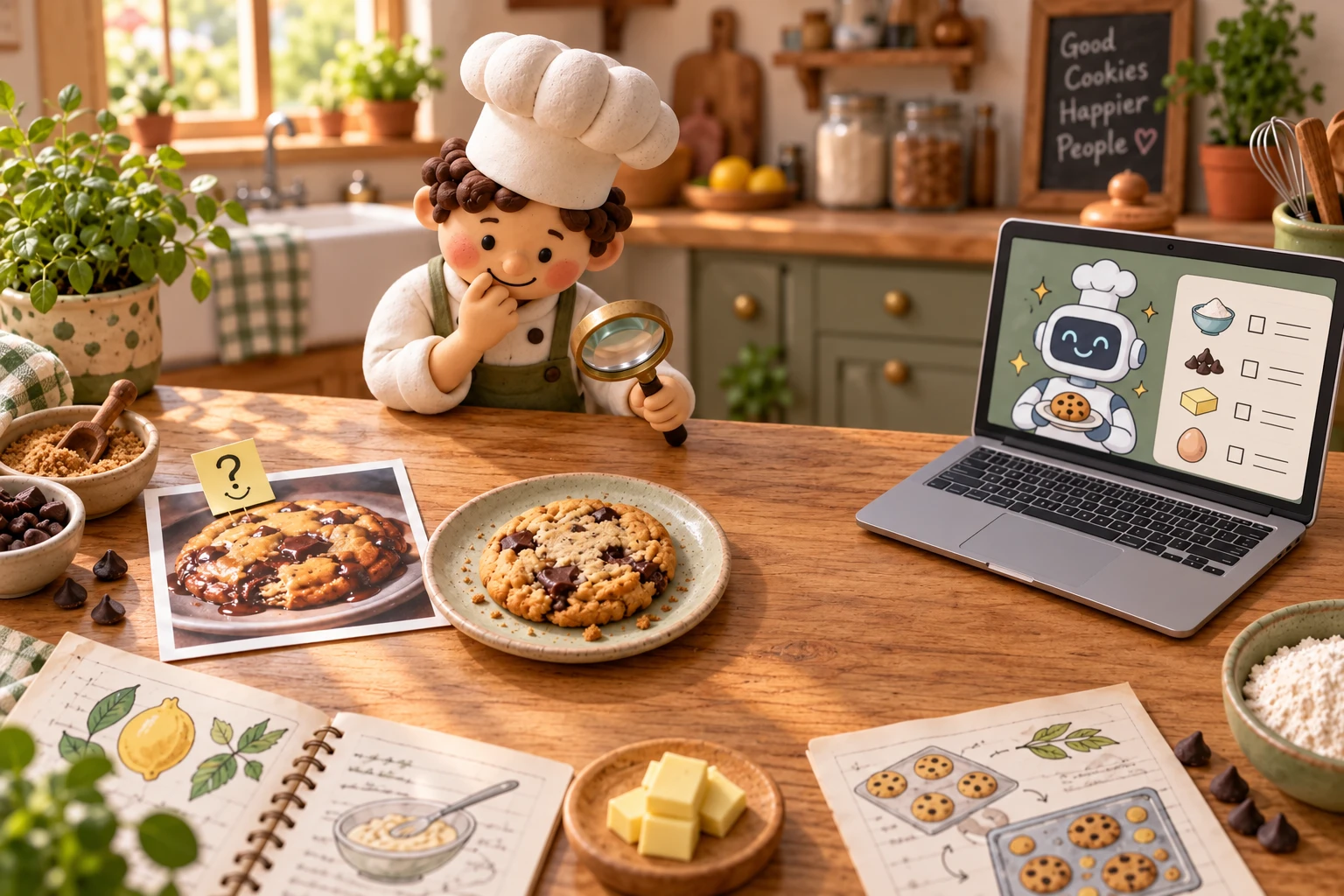
A recipe can look convincing long before it proves that anyone cooked it. The useful question is not whether you can identify artificial intelligence from a glossy photo. It is whether the recipe gives you enough evidence to trust it with your ingredients and time.
Start with traceability. Is there an identifiable author, a real publication history, or an explanation of how the recipe was developed? None of those details guarantees success, but they create accountability. In The Kitchn's reporting on AI-generated recipes, experienced developers repeatedly returned to testing as the missing step. Fluent instructions are not the same as a cooked result.
Next, read across the recipe instead of straight down it. Every important ingredient should have a job in the method. The written steps and finished image should describe the same food. In the article's test, the only lemon ingredient was marked optional, a pictured glaze never appeared in the directions, and the cookies had browned bottoms even though the method never used an oven. Those contradictions mattered more than awkward prose.
Finally, look for observable endpoints. Useful directions tell you what should change: a batter becomes thick and glossy, bread turns golden and sounds hollow, or a sauce reduces to a described consistency. Time estimates help with planning, but sensory cues help you adjust to your pan, stove, and ingredients.
No single odd measurement, blurry image, or typo proves that a recipe was machine-generated. Human recipes can be flawed, and generated ones can look polished. Treat the checks as a trust test, not a detection game. When a recipe fails several of them, choose a version from a source you know, then read the complete method before shopping.