 Steady Bites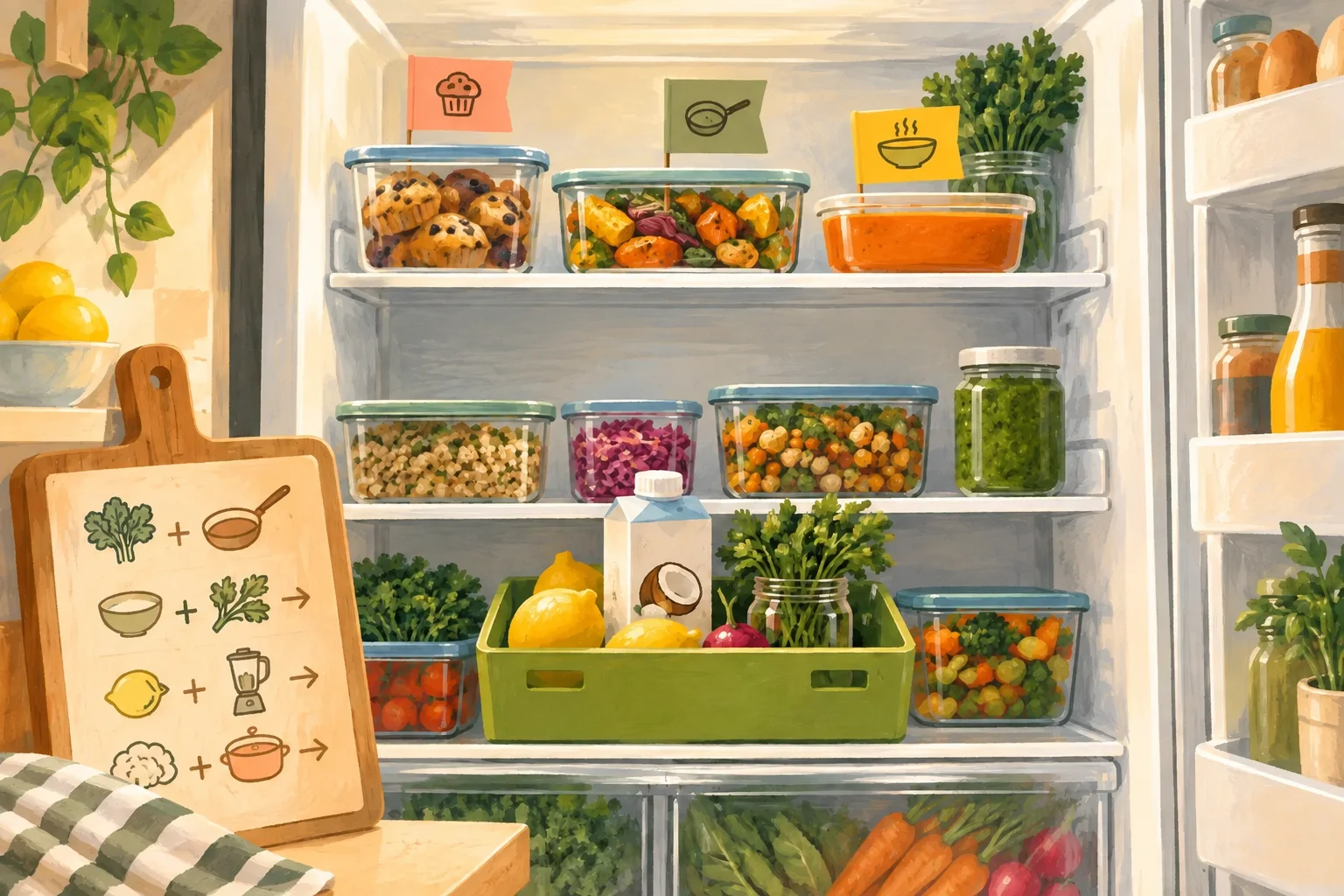
The hardest part of using leftovers is often not cooking. It is seeing a container in the refrigerator and knowing what happens next. In an NPR Life Kit story, chefs Margaret Li and Tamar Adler treat that moment as a small creative problem rather than a guilt test.
Their most practical idea is to give food a destination. Labeling a container “blueberries for muffins” or “injera for eggs” records an intention, not just a date. An “Eat Me First” box gives half-used lemons, leftover coconut milk, and produce nearing its limit one visible place. Dedicated freezer bags can collect scraps for a future soup or fruit for blending.
A second move is to keep a few flexible formats ready. Stir-fries, frittatas, fried rice, soup, and blended herb sauces can absorb different ingredients without demanding the same shopping list every time. Day-old rice can become an advantage in fried rice; herb stems can join the leaves in a sauce; cooked grains, vegetables, or bits of cheese can find a second form.
Creativity still needs a safety boundary. FoodSafety.gov advises refrigerating leftovers within two hours (one hour when exposed to temperatures above 90°F) and eating refrigerated leftovers within three to four days. A label cannot make food safe after poor storage, and smell alone is not a reliable test.
This approach works best without perfectionism. Li explicitly allows that some experiments will fail and some food should be discarded or composted. The win is not an empty refrigerator at any cost. It is reducing the number of forgotten containers by making the next use easier to see.